Healing Isn’t Just for Superheroes—Even Mamas Need a Sidekick!
Updated: Sep 24
Welcome to Mamahood After Trauma, a space created to support mothers as they heal from trauma, break generational cycles, and discover healthier ways of showing up for themselves and their families. Here, you’ll find honest conversations, practical tools, and encouragement to remind you that healing is possible, one step at a time.
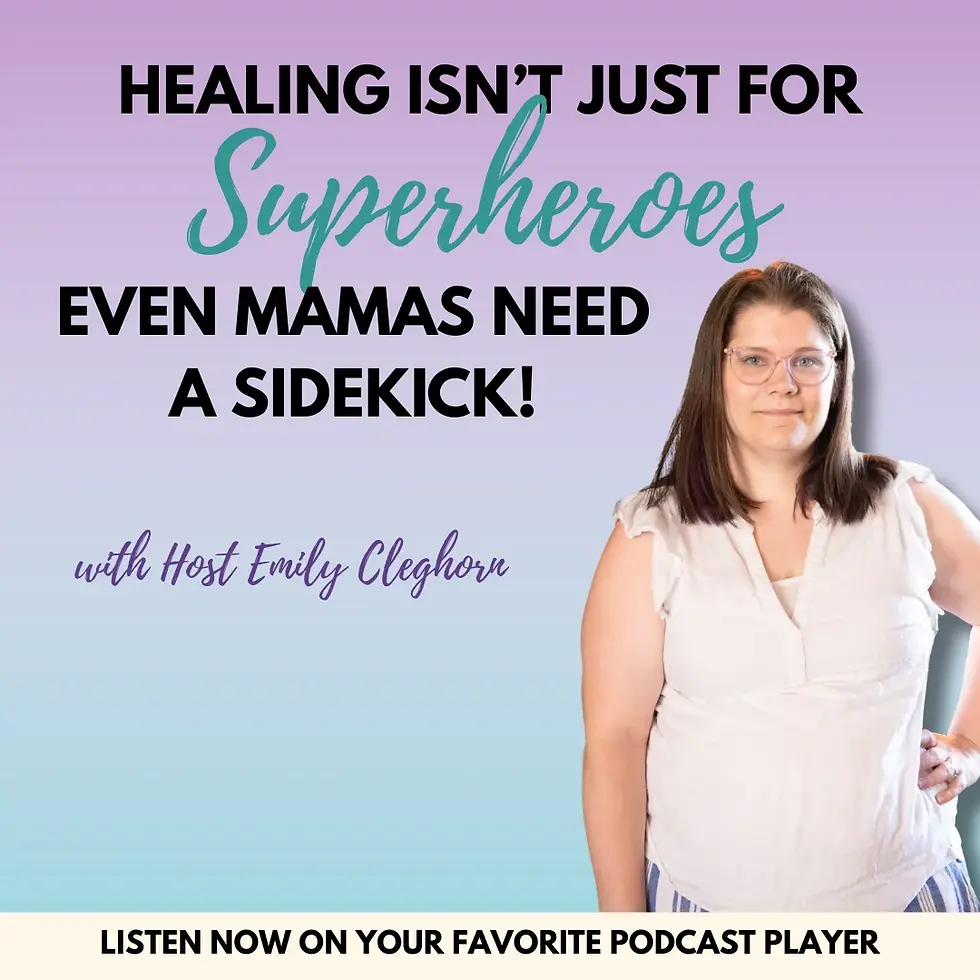
Table of Contents
The Missing Piece in Trauma Healing for Mothers: The Trifecta of Safety, Support, and Consistency
Why Traditional Healing Methods Sometimes Fall Short
The Trifecta: Safety, Support, and Consistency
Introducing "Beyond the Trigger": A Program Built on the Trifecta
Key Takeaways: You Are Not Broken—You’re Just Missing a Piece
Next Steps: Start Your Healing Journey Today
About Emily Cleghorn
The Missing Piece in Trauma Healing for Mothers: The Trifecta of Safety, Support, and Consistency
Healing from trauma is a journey—one that’s often filled with hope, effort, and, sometimes, frustration. If you’re a mother who has survived trauma, you may know this all too well. You’ve tried journaling, affirmations, therapy, and podcasts. You’ve read the books, posted the quotes, and done everything “right.” Yet, you still feel stuck, reactive, or like something is missing.
In a recent episode of the "Mama Hood After Trauma" podcast, host Emily dives deep into this very challenge. She shares her own experience of feeling stuck despite doing all the “right” things and introduces what she calls the missing piece—a powerful trifecta that can transform your healing journey: safety, support, and consistency.
Let’s break down each element of this trifecta, explore why they matter, and discover actionable steps you can take to move beyond surface-level healing.
Why Traditional Healing Methods Sometimes Fall Short
Before we dive into the trifecta, it’s important to acknowledge a common frustration: doing all the work but not feeling better. Many trauma-surviving mothers find themselves:
Journaling daily but still feeling triggered
Practicing affirmations but struggling to believe them
Attending therapy but not seeing lasting change
Listening to podcasts but feeling alone in their struggles
Emily’s insight is that these methods, while valuable, often don’t create deep, lasting change unless they’re grounded in safety, support, and consistency. Without these, healing can remain surface-level, and true transformation remains out of reach.
The Trifecta: Safety, Support, and Consistency
1. Safety: Regulating Your Nervous System
What It Means:Safety isn’t about forcing yourself to “think positive” or pretending everything is okay. It’s about genuinely feeling safe in your own body and mind. For trauma survivors, the nervous system can remain on high alert, making it hard to relax, trust, or feel grounded.
Why It Matters:If your body doesn’t feel safe, no amount of positive thinking or self-talk will create real change. Healing starts with the nervous system—learning to calm it, listen to it, and create an internal environment where you can truly rest and heal.
Actionable Steps:
Practice Grounding Techniques: Try deep breathing, progressive muscle relaxation, or grounding exercises (like feeling your feet on the floor or holding a comforting object).
Tune Into Your Body: Notice sensations without judgment. Ask yourself, “What does my body need right now to feel a little safer?”
Create Safe Spaces: Designate a corner of your home as a “safe zone” with comforting items—soft blankets, calming scents, or gentle lighting.
Avoid Toxic Positivity: Allow yourself to feel what you feel. Safety comes from acceptance, not denial.
Expert Insight:Emily emphasizes that safety is not a quick fix. It’s a gradual process of learning to trust your body and mind again. Be patient and gentle with yourself.
2. Support: Being Truly Seen and Accepted
What It Means:Support isn’t just about having people around you—it’s about being truly seen and accepted in your struggles. Many mothers find themselves in communities where they feel pressure to “have it all together” or hide their pain. Real support means you can show up as you are, with all your imperfections.
Why It Matters:Healing in isolation is incredibly hard. When you’re held with compassion and understanding, your nervous system relaxes, and you can process emotions more safely. Authentic support helps you feel less alone and more empowered.
Actionable Steps:
Seek Out Safe Communities: Look for groups (online or in-person) where vulnerability is welcomed and judgment is absent.
Share Your Truth: Practice opening up about your struggles with trusted friends, a therapist, or a support group.
Set Boundaries: If certain relationships require you to “perform” or hide your pain, it’s okay to step back or limit your exposure.
Ask for Help: Whether it’s practical help with childcare or emotional support, reaching out is a sign of strength, not weakness.
Expert Insight:Emily notes that true support is rare but essential. If you haven’t found it yet, don’t give up. Keep seeking spaces where you can be your authentic self.
3. Consistency: Small, Repeatable Daily Practices
What It Means:Consistency isn’t about grand gestures or intense bursts of effort. It’s about small, repeatable actions that you can sustain over time. Healing happens in the everyday moments, not just during big breakthroughs.
Why It Matters:Quick fixes rarely lead to lasting change. It’s the daily commitment to your healing—no matter how small—that rewires your brain, soothes your nervous system, and builds resilience.
Actionable Steps:
Create a Simple Routine: Choose one or two practices (like journaling, meditation, or gentle movement) and commit to them daily, even if only for a few minutes.
Track Your Progress: Use a journal or app to note your daily practices and reflect on how you feel over time.
Celebrate Small Wins: Acknowledge every step, no matter how minor. Consistency is built on positive reinforcement.
Be Flexible: Life as a mother is unpredictable. If you miss a day, offer yourself grace and start again tomorrow.
Expert Insight: Emily shares that consistency was the game-changer in her own journey. It’s not about perfection—it’s about showing up for yourself, day after day.

Introducing "Beyond the Trigger": A Program Built on the Trifecta
Recognizing that so many mothers are missing these key pieces, Emily created Beyond the Trigger—a program designed to provide safety, support, and consistency in a small, nurturing group setting. With space for just five mamas, it offers:
A safe, judgment-free environment
Authentic support from others who understand
Guided, consistent practices to anchor your healing
If you’re ready to move beyond surface-level healing and experience real transformation, this could be the missing piece you’ve been searching for.
Key Takeaways: You Are Not Broken—You’re Just Missing a Piece
You’re not alone if you feel stuck despite your best efforts.
Safety, support, and consistency are the foundation of deep, lasting healing.
You deserve to feel safe, supported, and consistent in your healing journey.
Small steps matter—healing is a marathon, not a sprint.
Next Steps: Start Your Healing Journey Today
Download the Unlocking Piece Guide for practical tools to begin implementing the trifecta in your life.
Consider joining Beyond the Trigger if you’re ready for a more guided, supportive experience.
Remember: You are not broken. You are not behind. You might just be missing one key piece—and you deserve to have it.
About Emily Cleghorn

Emily Cleghorn is an award-winning Holistic Trigger Recovery Coach, bestselling author, podcaster, and sought-after speaker on a mission to help trauma-surviving mamas heal while parenting. Through her signature Mended Mama Method, Emily empowers moms to navigate triggers and tantrums with confidence, breaking free from reactive patterns and creating a peaceful, connected home.
Driven by her passion for creating positive generational change, Emily shares her powerful story of overcoming the grip of childhood trauma to inspire others that healing is possible; even in the chaos of motherhood. Her work has touched countless lives, giving mamas the tools and hope to reclaim their peace and raise emotionally healthy kids.
Further Resources
Emily Cleghorn’s Free Quiz: “Find Your Next Step to Calm and Healing”.
If you’re a mama healing from trauma and seeking a new way forward, remember: You deserve support, your child deserves joy, and together, you can break cycles and build a brighter future.


Comments