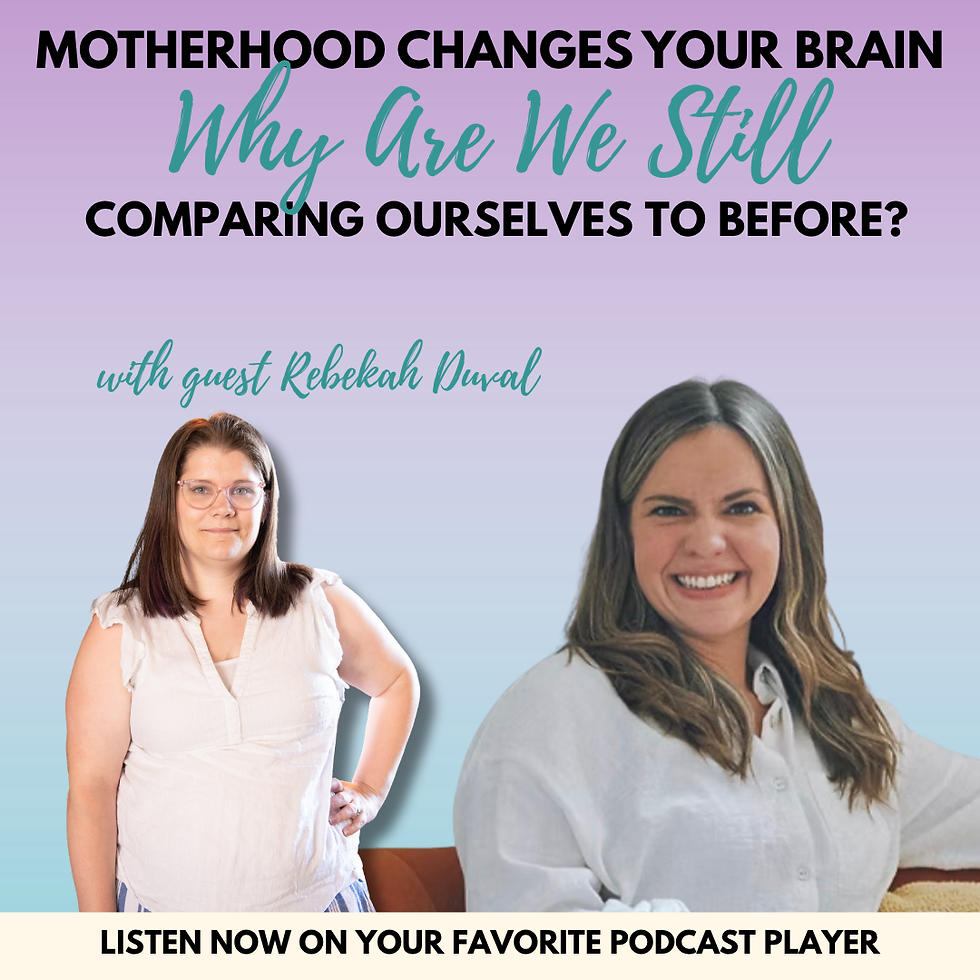
Motherhood Changes Your Brain. Why Are We Still Comparing Ourselves to Before?
Welcome to Mamahood After Trauma, a space created to support mothers as they heal from trauma, break generational cycles, and discover healthier ways of showing up for themselves and their families. Here, you’ll find honest conversations, practical tools, and encouragement to remind you that healing is possible, one step at a time.
Introduction
Becoming a mother can change everything, but for some women, the transition into motherhood comes with unexpected challenges that are made even harder by isolation, postpartum mental health struggles, and gaps in the support available to them. Rebekah Duvall became a mother just three weeks before the world went into lockdown in 2020. Her own experiences with postpartum OCD, anxiety, and physical complications eventually led her to pursue counselling and build a practice supporting families through pregnancy, postpartum, and beyond. Today, her work also includes advocating for better maternal mental health care and remembering Flora, whose story highlights why accessible, timely support matters.
Table of Contents
The help Flora sought was missed
Motherhood changes the measures
“Life can be really fucking hard sometimes”
A practice built from a different path

Rebekah Duvall became a mother in February 2020. Three weeks later, the world went into lockdown.
“I had my daughter, and then three weeks later, the world kind of shut down,” she said. “For all my other COVID mamas out there, I feel you.”
It was a beginning she hadn’t imagined, and not the only part of motherhood that would redraw her life. Duvall, then working in human resources and business, found herself facing postpartum mental and physical health challenges. The people who helped her through them also introduced her to perinatal mental health care. She went back to school for a master’s in counselling at the University of New Brunswick while still working. Later, after adopting her son, she opened a private practice.
Today, her team includes counsellors and other practitioners serving families through pregnancy, postpartum and beyond. But one story continues to shape her work: the story of Flora, a mother who sought help and still died of postpartum psychosis.
The help Flora sought was missed
Flora’s story is the reason for Flora’s Walk, an annual event held in May, Maternal Mental Health Month. Walks across Canada honour her memory and raise awareness and funds for accessible perinatal care.
Flora had family support. She went to the hospital for help. Her postpartum psychosis was missed, Duvall said, and Flora died.
When advocates brought the issue to Parliament in Ottawa, one member of Parliament reportedly dismissed Flora’s death as “a one-off.”
Duvall pushed back. Maternal mental health crises are not isolated tragedies, she said; they are a reason to build better systems of care. Mothers may have frequent appointments near the end of pregnancy, then find themselves largely on their own. A six-week checkup, if it happens, can leave important needs unaddressed, from counselling to pelvic-floor physiotherapy and early intervention.
“There’s so much proactive care we could do that we don’t do.”
For Duvall, the advocacy is personal. She experienced postpartum OCD and anxiety, as well as serious physical complications. With support, she made it through. She knows that is not everyone’s story.
Motherhood changes the measures
The difficulty, she said, can begin with the assumption that a new parent should still be able to function like the person they were before.
Parenthood shifts time, responsibilities and relationships. A partner may have been a source of support; now both parents are adjusting. Workouts, friendships and routines that once helped someone cope may suddenly be harder to reach. Then comes the comparison: the mother online who seems to be working out, eating well and ferrying children from activity to activity.
Behind the screen, Duvall cautioned, the support and circumstances are unknown.
She also pushes back against the familiar joke about “mom brain.” A parent’s mind may feel slower or less capable, she said, while also carrying an extraordinary amount of information and responsibility. Comparing it to a former self, or to someone else’s curated life, can make a hard transition feel like a personal failure.
The cultural script of motherhood often leaves little room for that mismatch. Mothers can talk more openly now about postpartum mood disorders, birth trauma and mental health, Duvall said, yet still feel pressure to keep the most difficult parts private.
The numbers she cited underscore how common these experiences are: about one in five people face a prenatal or postpartum mood disorder or related mental health challenges, including those connected to infertility or loss.
“Life can be really hard sometimes”
Duvall’s practice began with the help she received herself. The counsellor she saw during her perinatal experience gave her something she now works to offer others: a space where trust can be built gradually.
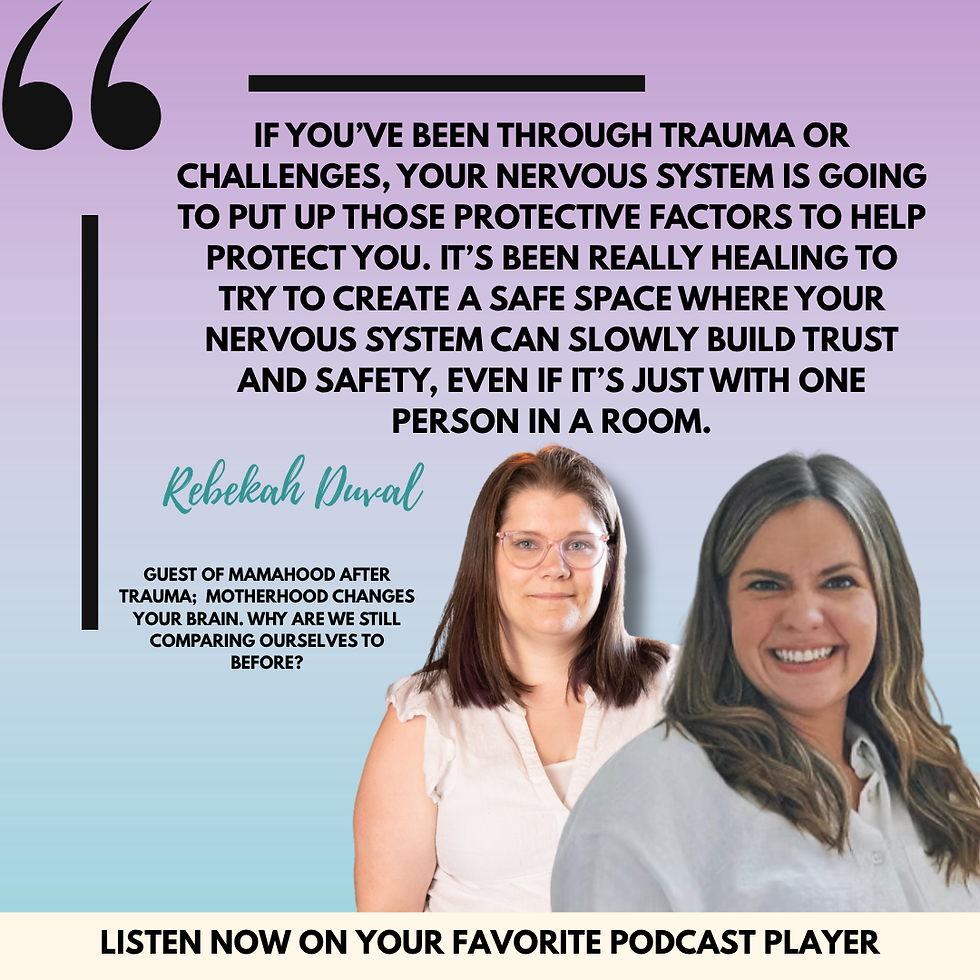
Trauma, she said, can convince people that they are alone, or that no one is safe enough to understand. Counselling cannot erase that history on demand. But a supportive relationship can give a person a place to begin testing whether safety is possible.
The work is not about pretending everything is fine.
“We’re not alone,” Duvall said. “But often we think we’re alone.”
That isolation can be reinforced by the partial version of motherhood people see in public: the polished update, the manageable confession, the story with its roughest edges trimmed away. Duvall shares parts of her own experience with clients not to claim that their stories are the same, but to show that pain does not make them uniquely broken.
“Life can be really fucking hard sometimes,” she said.
A practice built from a different path
Six years ago, Duvall said, she would have laughed at the idea that she would become a counsellor. Her background was in HR and business. Motherhood, lockdown and postpartum illness set her on an unexpected route.
Biologically having another child was not right for her family. Adoption brought two more children into her life, and the leave she took with her son helped prompt the next change: starting a small private practice.
The practice grew into a team, and Duvall added community advocacy, including Flora’s Walk and a five-kilometre event to raise money for accessible counselling. She hopes more mothers can find support before they are in crisis, not only when they manage to locate it themselves.
For now, her advice to someone unsure where to turn is simple: reach out. If she can’t help directly, she’ll try to connect them with someone who can.
“Even one life is huge,” she said.
Resources
Emily Cleghorn’s Free Quiz: “Find Your Next Step to Calm and Healing”.
Rebekah's Website: rebekahduvalcounselling.com
If you’re a mama healing from trauma and seeking a new way forward, remember: You deserve support, your child deserves joy, and together, you can break cycles and build a brighter future.


Comments