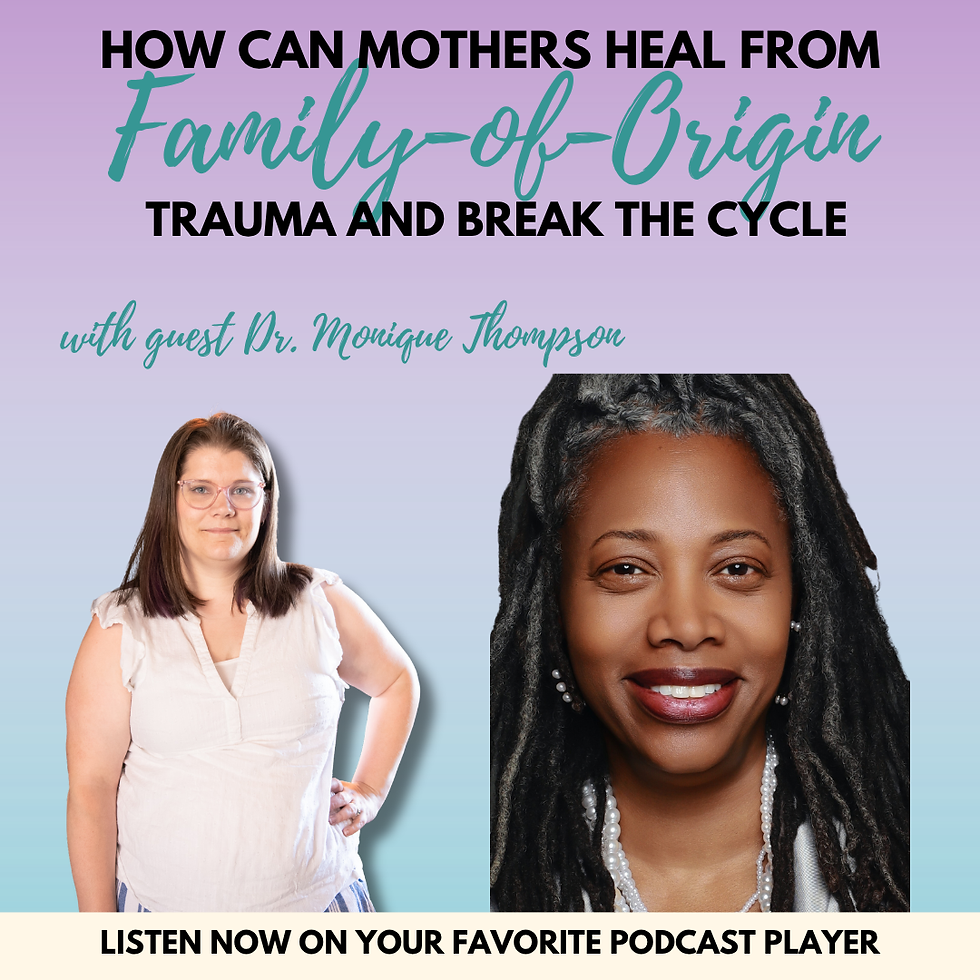
How Can Mothers Heal from Family-of-Origin Trauma and Break the Cycle?
Welcome to Mamahood After Trauma, a space created to support mothers as they heal from trauma, break generational cycles, and discover healthier ways of showing up for themselves and their families. Here, you’ll find honest conversations, practical tools, and encouragement to remind you that healing is possible, one step at a time.
Introduction
Healing from family-of-origin trauma can be especially complex because the people connected to the hurt may still be part of your life, your relationships, and even your children’s lives. Moving toward healing often means understanding how trauma has affected both your mind and body while recognizing that you don’t have to navigate the process alone.
In this blog, we’ll explore how building a strong healing team, understanding your nervous system, practicing meaningful self-care, and becoming curious about your own needs can help you move toward greater calm, connection, and confidence.
Table of Contents
Understanding Family-of-Origin Trauma
The Power of a Multidisciplinary Healing Team
The Science of Trauma: Your Nervous System Explained
Self-Care That Heals: Beyond Bubble Baths
Becoming the Scientist of Your Own Healing
Expert Resources and Where to Start
Final Thoughts: You Are Not Alone

Understanding Family-of-Origin Trauma
Family-of-origin trauma refers to wounds inflicted by those closest to us—parents, siblings, or other relatives. Unlike trauma caused by strangers, this type is deeply complex:
Ongoing Impact: The perpetrator is often still part of your life and, by extension, your children’s lives.
Lack of Closure: There’s rarely a clear sense of justice or resolution.
Systemic Effects: The trauma can ripple through the entire family system, affecting relationships, parenting, and even physical health.
Key Insight:
Dr. Thompson emphasizes that healing from family-of-origin trauma is not a solo journey. The complexity and emotional entanglement require a robust, multidisciplinary support system.
The Power of a Multidisciplinary Healing Team
Dr. Thompson’s most actionable advice is to build a healing team—a circle of support that addresses every facet of your well-being. Here’s how to assemble yours:
1. Trauma-Informed Medical Doctor
Why: Trauma can manifest as physical symptoms—chronic pain, hormonal imbalances, and sleep disorders.
What to Look For: A family physician or OB-GYN who understands trauma’s impact on the body.
Action Step: Ask your doctor about their experience with trauma-informed care. Don’t hesitate to seek a second opinion if you don’t feel heard.
2. Registered Dietitian
Why: Nutrition is foundational to healing. Trauma can disrupt appetite, digestion, and metabolism.
What to Look For: A dietitian who understands the interplay between mental health and nutrition.
Action Step: Request a nutrition assessment. Discuss how stress and trauma may be affecting your eating patterns.
3. Licensed Therapist or Behavioral Health Scientist
Why: Professional assessment and diagnosis are crucial. Trauma can present as PTSD, anxiety, depression, or other conditions.
What to Look For: A therapist with experience in trauma recovery, ideally using evidence-based modalities such as EMDR or somatic therapy.
Action Step: Interview potential therapists about their trauma training. Consistency is key—regular sessions help track progress.
4. Trauma-Informed Life Coach
Why: Life coaches help you set goals, maintain momentum, and integrate healing into daily life.
What to Look For: Certification in trauma-informed coaching and a collaborative, non-judgmental approach.
Action Step: Use coaching to bridge the gap between therapy and real-world change—parenting, relationships, and self-care.
5. Peer Support: Someone with Lived Experience
Why: Validation and hope can come from connecting with others who’ve walked a similar path.
What to Look For: Support groups, online communities, or a trusted friend who “gets it.”
Action Step: Join a trauma recovery group or online forum. Share your story and listen to others.
6. Academic and Educational Resources
Why: Understanding the science behind trauma empowers you to make informed choices.
What to Look For: Books and research by credible experts.
Recommended Reads:
The Body Keeps the Score by Bessel van der Kolk
Polyvagal Theory by Dr. Stephen Porges
Works by Dr. Gabor Maté
Pro Tip:
Use the CDC’s ACEs (Adverse Childhood Experiences) questionnaire to better understand your experiences and help guide conversations about your healing plan.
The Science of Trauma: Your Nervous System Explained
Modern trauma recovery is rooted in neuroscience. Dr. Thompson highlights the importance of understanding your nervous system states:
The Three Main States
1. Dorsal Vagal (Shutdown)
Symptoms: Numbness, withdrawal, exhaustion, and disconnection.
When You Might Notice: Feeling “checked out” or unable to engage.
2. Sympathetic (Fight or Flight)
Symptoms: Anxiety, agitation, irritability, and hypervigilance.
When You Might Notice: Feeling on edge, easily startled, or overwhelmed.
3. Ventral Vagal (Social Engagement)
Symptoms: Calm, connected, present, and able to relate to others.
When You Might Notice: Enjoying time with loved ones and feeling safe and grounded.
Why This Matters:
You naturally move through these states throughout the day. Healing is about learning to recognize your state and using tools to shift toward connection and calm.
Self-Care That Heals: Beyond Bubble Baths
Self-care is often misunderstood as pampering. Dr. Thompson reframes it as nervous system and brain-centered care:
Effective Self-Care Strategies
Nature and Sunlight
Spend time outdoors. Sunlight and fresh air can help regulate your circadian rhythm and support your mood.
Animal Companionship
Interacting with pets can help reduce stress and increase feelings of safety.
Supportive Relationships
Seek out calm, nurturing people who help you co-regulate. Be mindful of relationships that consistently leave you feeling drained or agitated.
Creative Expression
Music, dance, art, and play can be powerful ways to support nervous system regulation and connection.
Body Awareness
Tune into physical needs—hunger, thirst, and comfort. Sometimes, the simplest change, like changing uncomfortable clothes, can make a big difference.
How to Know It’s Working
Check In:
After self-care, ask yourself: Do I feel calmer? Is my inner critic quieter? Am I more present with my children?
Observe Your Kids:
Pay attention to whether your children seem more connected and less agitated as you become calmer and more present yourself.
Becoming the Scientist of Your Own Healing
Dr. Thompson encourages mamas to approach healing with curiosity:
Regular Self-Check-Ins: Ask, “How do I feel right now? Which nervous system state am I in?”
Track What Works: Notice which activities, people, or environments help you feel better—and which don’t.
Experiment: Try new self-care practices, foods, or routines. Healing is not one-size-fits-all.
Objective Measures: Don’t rely solely on emotions. Track physical health markers like sleep, blood pressure, and energy levels to help gauge progress.
Expert Insight:
Healing is both a science and an art. Be patient and compassionate with yourself as you experiment and learn.
Expert Resources and Where to Start
Books and Thought Leaders:
The Body Keeps the Score by Bessel van der Kolk
Polyvagal Theory by Dr. Stephen Porges
Dr. Gabor Maté’s books and talks
Tools:
ACEs Questionnaire
Use the questionnaire to learn more about adverse childhood experiences and consider discussing the results with an appropriate professional.
Professional Support:
Dr. Monique Thompson
Instagram: @Dr.MoniqueThompson
Website: doctorMoniqueThompson.com
Final Thoughts: You Are Not Alone
Healing from family-of-origin trauma is an ongoing process. The journey can be complex, but you don’t have to walk it alone. By building a multidisciplinary team, understanding your nervous system, and practicing brain-centered self-care, you can take meaningful steps toward breaking cycles and reclaiming calm for yourself and your children.
Remember:
Healing is not linear.
Support is essential.
You are worthy of peace and connection.
Take the Next Step:
If you’re unsure where to begin, start with Emily’s free quiz to discover your next step toward calm and confidence.
Mend the past so you can mama in peace.

Resources
Emily Cleghorn’s Free Quiz: “Find Your Next Step to Calm and Healing”.
If you’re a mama healing from trauma and seeking a new way forward, remember: You deserve support, your child deserves joy, and together, you can break cycles and build a brighter future.


Comments