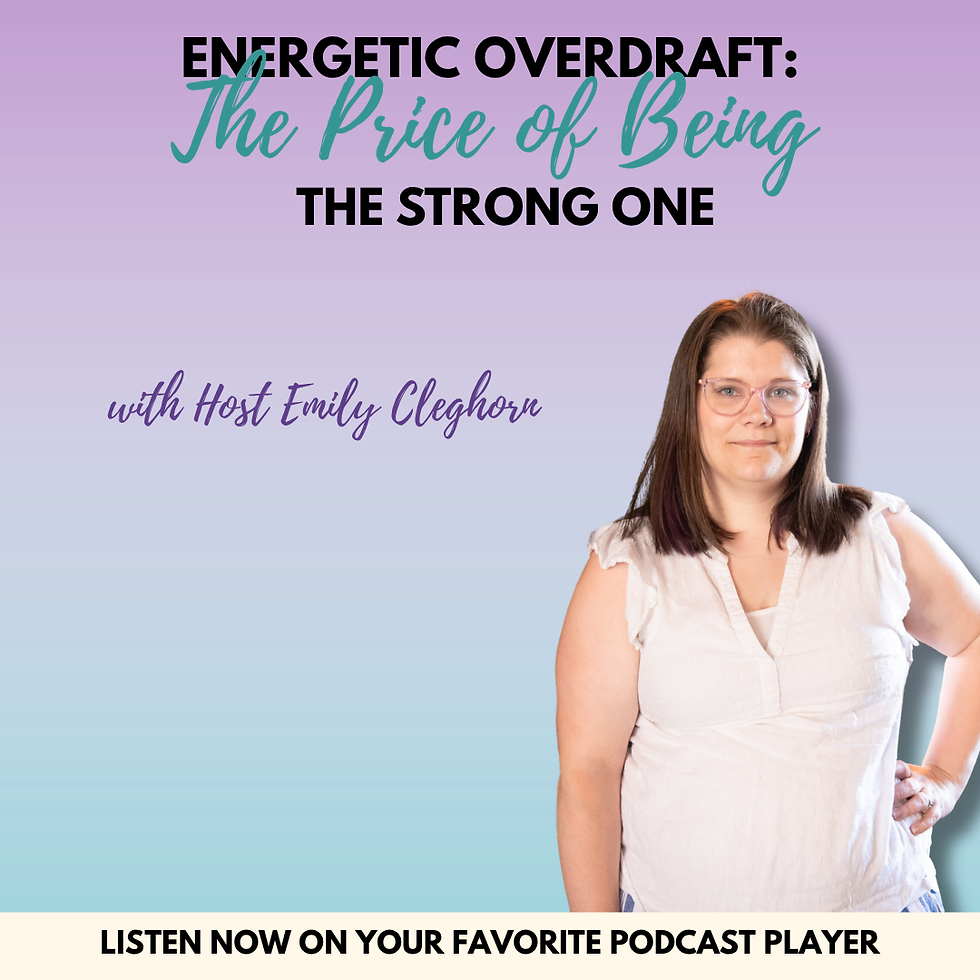
Energetic Overdraft: The Price of Being the Strong One
Updated: Sep 24
Welcome to Mamahood After Trauma, a space created to support mothers as they heal from trauma, break generational cycles, and discover healthier ways of showing up for themselves and their families. Here, you’ll find honest conversations, practical tools, and encouragement to remind you that healing is possible, one step at a time.
Introduction
Being “the strong one” can look admirable from the outside, but constantly giving, fixing, supporting, and carrying the weight for everyone else can come at a cost. When you continually spend more emotional and physical energy than you have available, you can find yourself living in a state of exhaustion, overwhelm, and resentment.
In this blog, we’ll explore the idea of “energetic overdraft,” how trauma can shape patterns of hyper-independence and over-functioning, and what it can look like to protect your capacity, embrace rest, set boundaries, and rediscover who you are beyond what you do for others.
Table of Contents
Understanding Energetic Overdraft
The Strong One: Trauma Response or True Strength?
The Difference Between Being Needed and Being Loved
Resentment: The Warning Light on Your Dashboard
The Trap of “I Can Handle It”
The Fear of Disappointing Others
Rest: You Don’t Have to Earn It
Reclaiming Yourself: Who Are You Without the Armor?
Actionable Steps to Move Out of Energetic Overdraft
Your Weekly Invitation
Final Thoughts
Understanding Energetic Overdraft
What Is Energetic Overdraft?
Emily uses the metaphor of a bank account to describe our emotional and physical energy. Just like money, you have a finite amount of energy each day. When you spend more than you have—by giving, fixing, supporting, and never refilling your own reserves—you end up in “energetic overdraft.” This chronic depletion leads to resentment, exhaustion, and a loss of self.
Key Signs You’re in Energetic Overdraft:
Constant fatigue that feels “normal”
Overwhelm as a baseline state
Resentment toward those you love
Difficulty identifying your own needs or desires
Feeling guilty or anxious when resting
The Strong One: Trauma Response or True Strength?
How We Become “The Strong One”
For many trauma survivors, being the strong one isn’t a choice—it’s a survival strategy. Hyper-independence, self-reliance, and always being the responsible one often stem from childhood experiences where support was lacking or unreliable.
Common Roots:
Being the “mature” or “responsible” child
Managing emotions to avoid conflict or disappointment
Learning early that “if I want something done, I have to do it myself”
Becoming the go-to problem solver for everyone
The Hidden Cost:
While these traits are often praised, they can mask a deep-seated belief that you can’t rely on anyone else, making it hard to ask for help or receive support.
The Difference Between Being Needed and Being Loved
Why Being Needed Feels So Important
Emily highlights a crucial distinction:
Being needed is about what you do for others.
Being loved is about who you are.
When your identity is built around being indispensable, your worth becomes tied to your output. This can make it terrifying to set boundaries or say no for fear of losing your value in relationships.
Reflection Questions:
What happens when you stop doing?
How do your relationships respond when you need support?
Are your connections reciprocal, or do they depend on your self-abandonment?
Resentment: The Warning Light on Your Dashboard
Why Resentment Matters
Resentment is often misunderstood, especially for mothers who are expected to be endlessly giving. But resentment is valuable information—it signals that you’re giving more than you have or doing things you don’t actually want to do.
What Resentment Might Be Telling You:
“I’m giving more than I have.”
“I said yes when I wanted to say no.”
“I’m carrying something that isn’t mine.”
“Nobody is asking how I’m doing.”
Action Step:
Instead of shaming yourself for feeling resentful, use it as a cue to check your energetic bank account and reassess your boundaries.
The Trap of “I Can Handle It”
Capability vs. Capacity
Trauma survivors are often highly capable, but capability doesn’t mean you should always be the one to handle everything. Emily urges listeners to ask:
Is this mine to carry?
Do I want this responsibility?
Do I have the capacity right now?
What will it cost me if I say yes?
Expert Insight:
Just because you can handle something doesn’t mean you should. Discernment is key to protecting your energy and well-being.
The Fear of Disappointing Others
Why We Overextend Ourselves
Many strong women keep overdrawing their energy because they’re afraid of disappointing others. The truth is, disappointment is inevitable—someone will always be let down at some point. The real work is learning to tolerate others’ disappointment without abandoning yourself.
Practical Tips:
Allow others to feel disappointed; their feelings are theirs to manage.
Remember: Your capacity is yours to protect.
Practice saying no without over-explaining or apologizing.
Rest: You Don’t Have to Earn It
Redefining Your Relationship with Rest
The strong one often only rests when everything is done—which means she never rests. Emily challenges this mindset:
You don’t have to earn rest.
You don’t have to justify it.
You can rest simply because you’re human.
If Rest Feels Uncomfortable:
Notice what comes up—guilt, anxiety, restlessness.
Explore the beliefs you hold about productivity and worth.
Practice resting in small ways, even if it feels awkward at first.
Reclaiming Yourself: Who Are You Without the Armor?
Rediscovering Your Needs and Desires
Healing from trauma means becoming reacquainted with yourself—your likes, dislikes, needs, and dreams. For many, this is a foreign concept after years of prioritizing everyone else.
Reflection Exercise:
Who are you when you’re not the strong one?
What do you want, separate from what others expect?
What would you do differently if you trusted you didn’t have to carry everything?
Actionable Steps to Move Out of Energetic Overdraft
1. Build Awareness
Start by noticing where your energy goes each day. Ask yourself:
Where am I spending energy I don’t have?
What am I doing out of obligation or fear of disappointing others?
Where am I over-functioning or rescuing?
2. Make Small Changes
You don’t have to overhaul your life overnight. Begin with small, manageable shifts:
Delay your response to requests—give yourself time to check your capacity.
Delegate tasks or ask for help, even if it feels uncomfortable.
Say no to things that aren’t yours to carry.
Allow yourself to rest, even if the to-do list isn’t finished.
3. Practice Self-Compassion
Remind yourself: You are allowed to have limits.
You don’t have to be the strongest person in every room to deserve a place in it.
Your worth is not tied to your productivity or usefulness.
4. Redefine Strength
Strength isn’t about carrying everything; it’s about knowing what isn’t yours to carry.
Healing may mean becoming softer with yourself, not weaker.
5. Use Resentment as a Guide
When resentment arises, see it as a signal to check your boundaries and energy expenditure.
Adjust accordingly, without guilt.
Your Weekly Invitation
Emily’s Challenge:
Think about your energetic bank account. Where are you overspending? What are you giving that you don’t have? Who or what are you carrying out of obligation or fear? What would you do differently if you trusted you didn’t have to carry everything?
Remember:
Awareness is the first step. You don’t have to change everything at once—just start noticing.
Final Thoughts
You can be strong and still need support. You can be capable and still have limits. You can love people and still say no. You can put the weight down without becoming less of who you are.

Resources
Emily Cleghorn’s Free Quiz: “Find Your Next Step to Calm and Healing”.
If you’re a mama healing from trauma and seeking a new way forward, remember: You deserve support, your child deserves joy, and together, you can break cycles and build a brighter future.


Comments